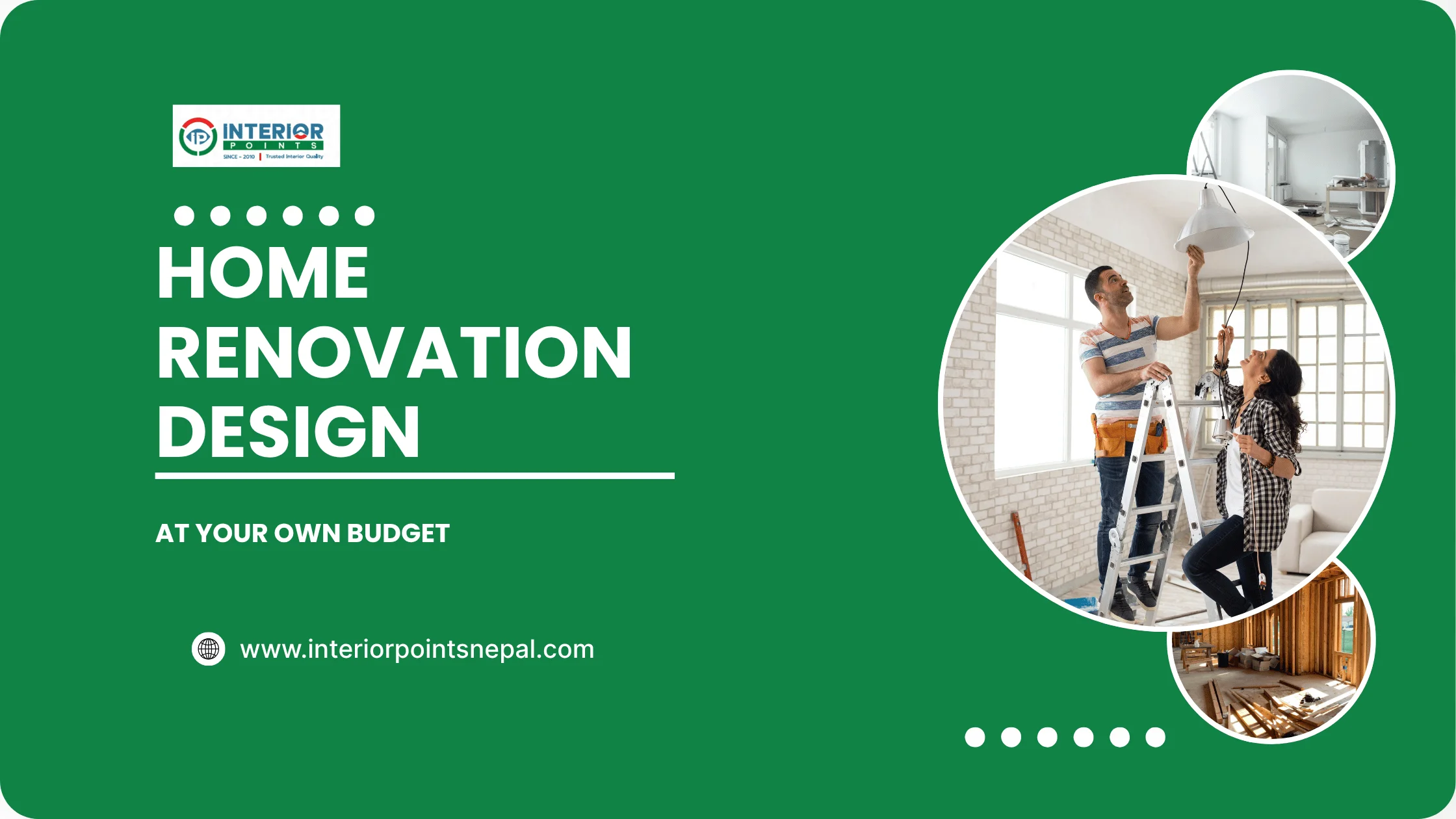
Renovating your home is an exciting opportunity to create a space that feels more comfortable, functional, and beautiful. However, one of the biggest concerns homeowners face is how to achieve a stylish home renovation design without exceeding their budget.
The good news is that a successful renovation does not always require a huge investment. With proper planning, smart material selection, thoughtful space planning, and professional interior design guidance, you can transform your home according to your own budget and lifestyle.
Whether you are planning a small room makeover, a kitchen renovation, a complete apartment renovation, or an entire home transformation, this guide will help you understand how to plan a budget-friendly home renovation design in Nepal.
Home renovation design is the process of improving an existing home by changing, upgrading, or redesigning its interior spaces. Depending on your requirements and budget, renovation can include:
A renovation does not necessarily mean changing everything. The most effective approach is to identify which areas need improvement and invest your budget where it creates the greatest impact.

Before starting your home renovation design, the first and most important step is to determine your total renovation budget. Setting a clear budget helps you make practical design choices, prioritize essential improvements, and avoid unnecessary expenses during the renovation process.
Your renovation budget can generally fall into one of these categories:
There is no fixed renovation budget that works for every home. The overall cost depends on several factors, including the size of your property, its existing condition, material quality, labor or workmanship costs, location, and the overall scope of the renovation.
Before planning your home renovation design, decide which areas need the most attention. Prioritizing helps you use your budget wisely and focus on essential improvements first.

Before starting your home renovation design, assess your home’s current condition, layout, and available space. This helps you identify what needs improvement and avoid unnecessary changes.
Smart renovation is not about replacing everything. It is about knowing what is worth replacing.

Choose between a partial or complete renovation based on your budget, home condition, and requirements.
Choosing the right home renovation design style helps you create a beautiful space without exceeding your budget. Select a style based on your preferences, lifestyle, available space, and the level of investment you are comfortable with.
A smart home renovation design focuses your budget on improvements that offer the most value, comfort, and long-term benefits.
The goal is to create a functional and attractive home without unnecessary spending.
Choosing the right materials can help you achieve a stylish home renovation design while staying within your budget.
You don’t always need major construction work to give your home a fresh and stylish look. Small, thoughtful changes can make a big difference while keeping your home renovation budget under control.
1. Refresh the Wall Colors: A fresh coat of paint can quickly transform a room.
Consider:
For more impact, use a feature wall instead of expensive treatments throughout the room.
2. Upgrade the Lighting: Good lighting can instantly improve the look and feel of your home.
Consider using:
Pendant lights, wall lights, and spotlights can add style without major renovation work.
3. Improve Storage: Smart storage keeps your home organized and clutter-free.
Consider:
4. Update Existing Furniture: You don’t always need to replace all your furniture. Give existing pieces a fresh look by:
5. Use Feature Walls Strategicall: A feature wall can add personality without a high cost. Options include:
Focus on key areas such as the TV wall, bed backdrop, dining wall, or entrance.

A kitchen renovation doesn’t always require a complete makeover. With smart planning, you can improve the appearance and functionality of your kitchen while staying within your budget.

You can give your living room a fresh and stylish look without a major renovation. Focus on simple updates that improve comfort, appearance, and functionality.

A few simple changes can make your bedroom feel more comfortable, relaxing, and stylish without a major investment.
Avoiding common mistakes can help you save money, time, and unnecessary stress during your home renovation.
At The Interior Points Nepal, our approach is to understand your space, requirements, lifestyle, and budget before developing an interior design solution.
Every homeowner has different priorities. Some may want a modern living room, while others may prioritize a functional kitchen, additional storage, a Neo-Class interior, or a complete home transformation.
Our goal is to create a renovation design that balances:
Design + Functionality + Quality + Budget
Whether you are planning a small renovation or a complete home makeover, a customized approach allows you to make better decisions about where your investment should go.
A successful home renovation is not determined by how much money you spend. It is determined by how effectively you use your budget.
With proper planning, realistic expectations, thoughtful material selection, and smart interior design, you can create a home that looks beautiful and works well for your lifestyle.
Start by defining your budget, identify your priorities, evaluate your existing space, and decide where your investment will have the greatest impact.
If you’re planning a home renovation in Nepal and want a design tailored to your space and budget, The Interior Points Nepal can help you turn your ideas into a practical and beautiful interior.
Ready to Renovate Your Home?
Let’s design a space that works for your lifestyle, your requirements, and your budget. Contact The Interior Points Nepal to discuss your renovation project.
Also Read: Best Cozy Living Room Interior Design Ideas in Nepal
Ans: Start by identifying essential repairs and high-impact improvements. Prioritize areas such as lighting, paint, storage, furniture layout, and selected feature walls rather than trying to renovate everything at once.
Ans: Your budget and renovation priorities should be established before design and construction begin. Understanding the condition of the existing property is also essential.
Ans: Yes. A professional interior designer can help you plan the space, select suitable materials, prioritize spending, and avoid costly design and construction mistakes.
Ans: Yes. Strategic use of lighting, colors, furniture, wall treatments, proportions, and selected premium-looking finishes can create an elegant appearance without making every element expensive.
Ans: Not necessarily. If your budget is limited, consider renovating the home in phases, starting with areas that require the most attention or provide the greatest improvement to your daily life.
Your Dream Space Starts Here Get Exclusive Design Straight Your Inbox!